
Response: Successful Activation of Protocols, or Fiasco? Let's Laugh About the Difference!
I'm From the Government I'm Here to Help: Disaster: Chapter 1: Episode 4.

Read here for YOU by ME!
RESPONSE
Response is the reason that I have more Humanitarian and Emergency Services ribbons cluttering up my Class A uniform than war ribbons. Response is one of the reasons why it took me three tries to finish the Combat Lifesavers course at Fort Bragg (which was my initial introduction, to training for medical things that just plain suck. Up until then, I really didn’t have much interest in medical things at all).
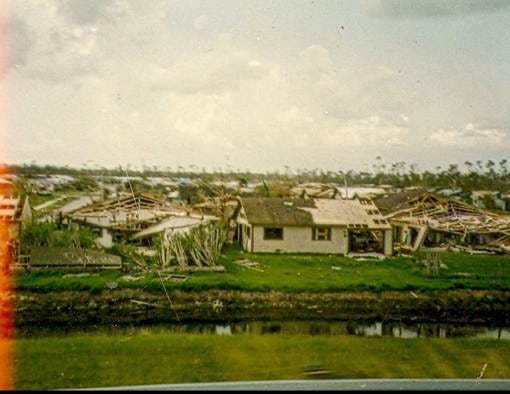
Response even got my picture in a few newspapers, without so much a mention of my name of course, but that’s a different subject. What few quotes of mine actually made it into print were usually misquoted, taken out of context or changed completely anyway so maybe the lack of credit was for the best.
Response is the only aspect of emergency management that is run at the hands of a stop watch. No matter how many miles lie between the responders and the respondees, response cannot get there fast enough. Mae West didn’t know it, but when she said, “Instant gratification takes too long” she was comparing the momentum of gratification to what is expected of response.
Light travels (barring black holes and other anomalies of dark matter) at 186,000 miles per second. It is also the fastest speed allowed by law. It’s my experience that if our response to your disaster takes that long, it’s still too slow.
Therefore, our goal is to create a reality where the only thing shorter than disaster to response is the time between the light turning green and the idiot behind you hitting the horn (A time interval that cannot possibly be improved upon, as we well know).
Activating Emergency Response Plans, establishing communications, assessing the situation, obtaining assets, setting up base camps, organizing assets, organizing volunteers, setting up security, identifying safety hazards, convincing the people that even though we are from the government we are actually there to help. These, along with a few others I may have missed, are all activities in this most renowned and revered phase.
Unlike Mitigation, Preparedness and Recovery, this phase actually has a specific beginning and end point. Officially speaking Response starts when the Emergency is identified, the warnings go out over radio, TV, internet and siren and the whining and rumor mongering begins. The ending happens when the assets to facilitate Recovery are present or accounted for, and the long road to recovery begins. Response ends when the event that caused the problem in the first place is stabilized or ceases and desists on its own, and the levels of government have revealed whether it will be treated as a “Response” or “Fiasco”.
It’s the time when the Emergency Management Protocols should already have been written, discussed, and contracts with appropriate local companies have been negotiated. All the names of the key private sector and local government players should have been named, known to each other and have met. They should all have been through a few wringers and After Action Reportings, because the Mock Disaster Drills made that happen.
CONGRATULATIONS! To every and all jurisdictions where that is actually the case… those rare few of you.
For the other ones, yes, Emergency Protocols were probably written up, there may have even been a bit of discussion. Contracts might, if at all, appear on cocktail napkins with vague instructions to the contractors and signatures that just might, maybe, with some level of cryptographic experience and imagination, look something close to the signatures of the contractor and appropriate government official.
But the REAL test is… Did the mayor or county head honcho actually activate the protocols when the disaster struck?
This is one of the most frustrating things to those of us whose active involvement in this circus has ceased. The ones who have “former” or “ex” attached to some impressive sounding title. The ones who know what should be happening, what probably might happen and then have to witness what actually happens as it plays out.
The barricade of bureaucracy usually comes down to one question. “Who’s getting stuck with the bill at the end”?
If the major activates the protocols (which is what the applicable laws and regulations so rudely insist on), then the city takes on the brunt of the expenses (which is exactly how it is meant to be, but convince mayors and city councils of that).
So what often happens (happily not as often as the accusers would make it sound, but still…) the press shows up, the major makes some hefty promises and impressively worded speeches, then calls on the state and federal government to take on the responsibility.
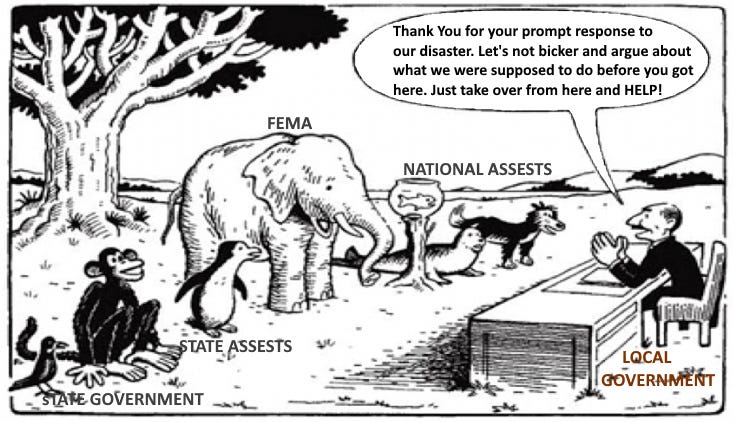
This activates a few things, the protocols get activated, but not put into action. The contractors don’t get called right off. The state Emergency Management officials think they are showing up to get the local government’s assessment of the situation and their receive requests for the state assets those assessments exposed.
FEMA officials show up, expecting the local and state officials to apprise them of the fruits of the assessments, what the local and state government have accomplished so far, and requests for national assets.
Anyone who has been paying attention may not have been privy to the meetings, assessments and requests, but we have seen the outcome dancing in the streets.
The local and state officials have already announced FEMA’s actions (even before requested) and the federal government becomes the primary leadership in the fiasco. Notice at this point I dubbed it “Fiasco” instead of “Response” because a legitimate Response is run from the local level with the state and federal government acting as support characters. The only thing that can successfully be accomplished when this highly organized and well executed system is turned on its head and run by the federal government, is, in fact the definition of “Fiasco”. Not that the federal government is made up of idiots. More like they aren’t the ones with the knowledge of local assets… so how can it work?
So there you have it, friends, neighbors, Substackers and whoever else is reading this almost informative info, the Response/Fiasco Circus!